
Health Blog
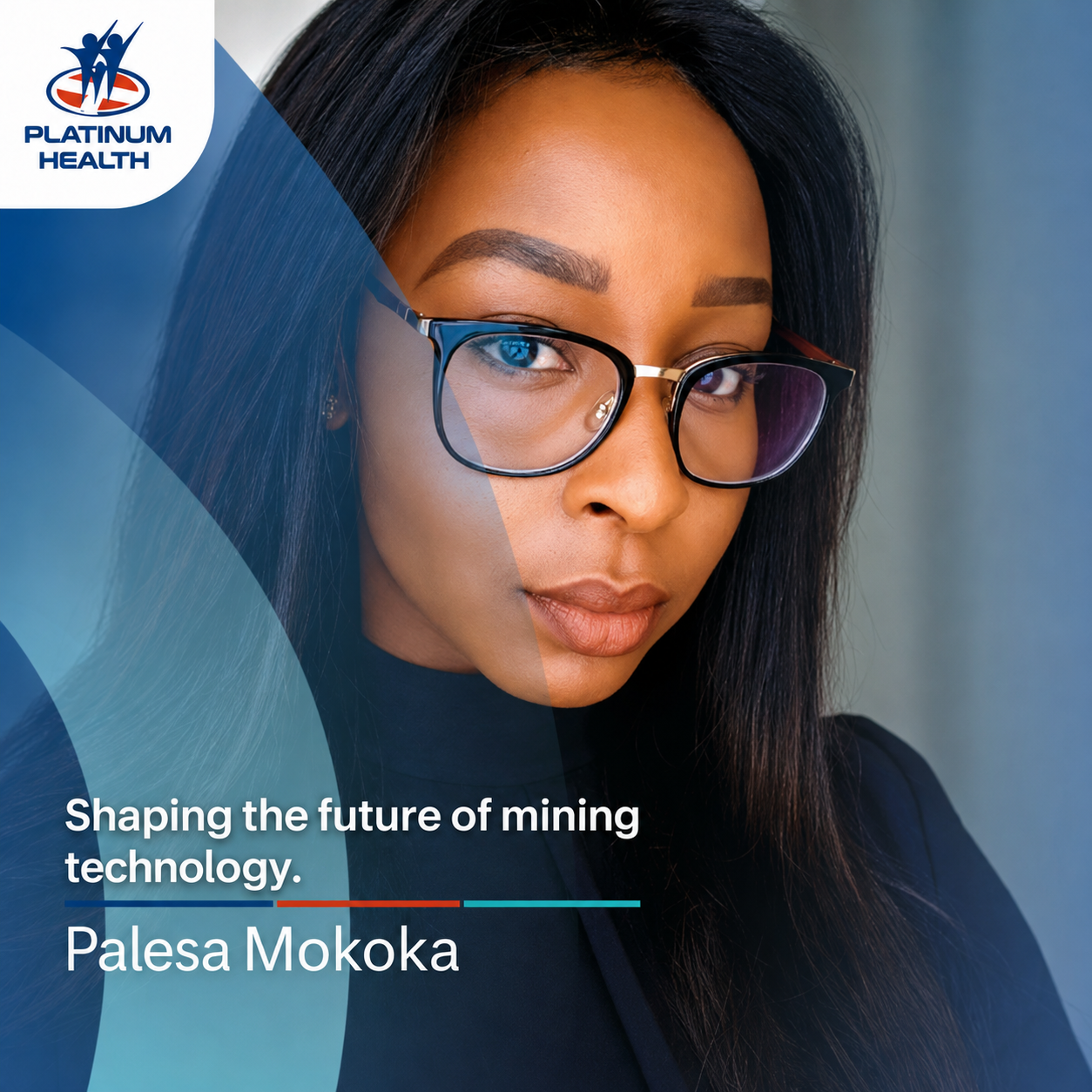
Women’s Month – Women shaping the future of healthcare technology in mining – Palesa Mokoka – IT Project Manager
Q&A
1. Tell us about your career journey and what inspired you to pursue a career in technology.
I started my career in IT project management at BCX about eight or nine years ago, consulting across a range of industries. That’s where my love for technology really took root – coordinating multiple moving parts and turning ideas into tangible, impactful systems. It was a deliberate path from the start. I studied Information Sciences at the University of Pretoria, specialising in Informatics and Business Analysis. This gave me an understanding not only of the importance of information, but also how it is structured, packaged and delivered and the impact this can have on business decision-making. IT project management became a natural fit because it brings information, people and delivery together to achieve a common goal. Early in my career, I was also heavily involved in SA Connect, a project that President Ramaphosa praised during his first State of the Nation Address. That experience really cemented for me just how much impact technology can have.
2. What attracted you to the healthcare sector?
The move into healthcare was organic. During my consulting years, I worked on projects across both the private and public sectors, and I realised that I was most drawn to work that had a direct impact on people’s everyday lives. That desire for impact grew during my time at SafetySA, where the health and safety of South Africans was central to the business – from food safety testing across vendors and restaurants nationally to occupational health and safety certifications for people working in the mining industry. That experience made the move into healthcare at Platinum Health feel like a natural next step in doing work that genuinely matters to people’s daily lives.
3. Did you expect your career would intersect with both healthcare and mining?
Definitely not. It’s one of those things you don’t necessarily plan for, but when I look back, the different stages of my career – working across the public and private sectors, food safety and occupational health in mining – were all quietly building towards it.
4. Have you faced any challenges or barriers throughout your career, and how did you overcome them?
Of course. Being taken seriously early in my career, particularly in spaces where IT project management isn’t always fully appreciated, has been a challenge. Given my age and gender, there have sometimes been assumptions that I need to prove myself before people trust my expertise or opinion. What I’ve learnt is that confidence comes from preparation, consistency and delivering meaningful results, rather than trying to be the loudest person in the room.
5. What leadership qualities have been most valuable in your role?
Managing multiple, high-stakes IT projects in a complex stakeholder environment requires clarity over comfort. It means being assertive and factual rather than defensive when things go wrong, translating technical realities into language that stakeholders at every level can understand and act on, and maintaining the confidence of a steering committee even when there are setbacks.
6. How is technology changing healthcare for mining employees and their families? How does technology improve member experience and healthcare outcomes?
Modernising and automating our member-facing and internal systems isn’t simply a technical exercise. It is about making healthcare interactions faster, clearer and more accessible for our members, including those who may not be comfortable navigating everything from a smartphone.
Behind the scenes, it also means making sure our systems work reliably in the real world – for example, when a member is querying a claim from a mine site, rather than simply demonstrating the system in a boardroom.
7. What technology trends do you believe will have the biggest impact on healthcare over the next five years?
I think three trends will have a significant impact on healthcare over the next five years.
AI could play an increasingly important role in assisted diagnostics, helping clinicians identify certain issues earlier and more accurately, which could be particularly valuable in preventative care.
Telehealth will continue to close the distance for members in remote areas, making access to quality healthcare less dependent on geography.
Predictive analytics could also help shift healthcare from reactive to proactive by identifying risks earlier and enabling intervention before conditions become more serious.
Together, these trends point towards a healthcare system that meets people where they are, rather than expecting them to come to it. Platinum Health is already making progress in this direction.
8. Who has inspired or mentored you throughout your career?
I’ve had the privilege of working with some exceptional women, most of them managers early in my career, at a time when technology was still largely male-dominated. They taught me the importance of balancing being nurturing with being assertive.
One woman in particular had a significant impact on my career – and, ironically, we share the same name: Palesa. She was my mentor and former manager, a CIO whose guidance helped shape me into the person that my previous company’s managing directors trusted to step into the Acting CIO role when she moved on.
9. What advice would you give to young women considering careers in technology, healthcare or mining?
Do it. Do it scared, do it nervous, and do it even when you doubt yourself, because that is often where the biggest growth happens.
And education is key. Technology is constantly evolving and changing, so be prepared to embrace a career of continuous learning – and unlearning.