
Health Blog
Advancing HIV Care: A Guide to Modern HIV Management
Advancing HIV Care: The Future of Health Management
Press Release by: Platinum Health Medical Scheme
HIV care has undergone a massive transformation over the past decade. It is no longer just about viral suppression.
Today, the priority is future-proofing patient health, reducing long-term risks, and creating a more sustainable healthcare system. As the life expectancy for people living with HIV continues to rise, healthcare systems are shifting their focus.
The new priorities involve managing comorbidities, mitigating medication-related risks, and preserving long-term organ health.
The Platinum Health Medical Scheme HIV Programme
The Platinum Health Medical Scheme HIV programme has made a significant investment in the healthcare of its beneficiaries. The scheme actively funds the transition of members to safer and more advanced HIV therapies.
This proactive approach helps prevent severe complications like chronic kidney disease, bone density loss, and other downstream health issues. Ultimately, this reduces long-term healthcare costs and disability burdens while keeping patients healthier for longer.
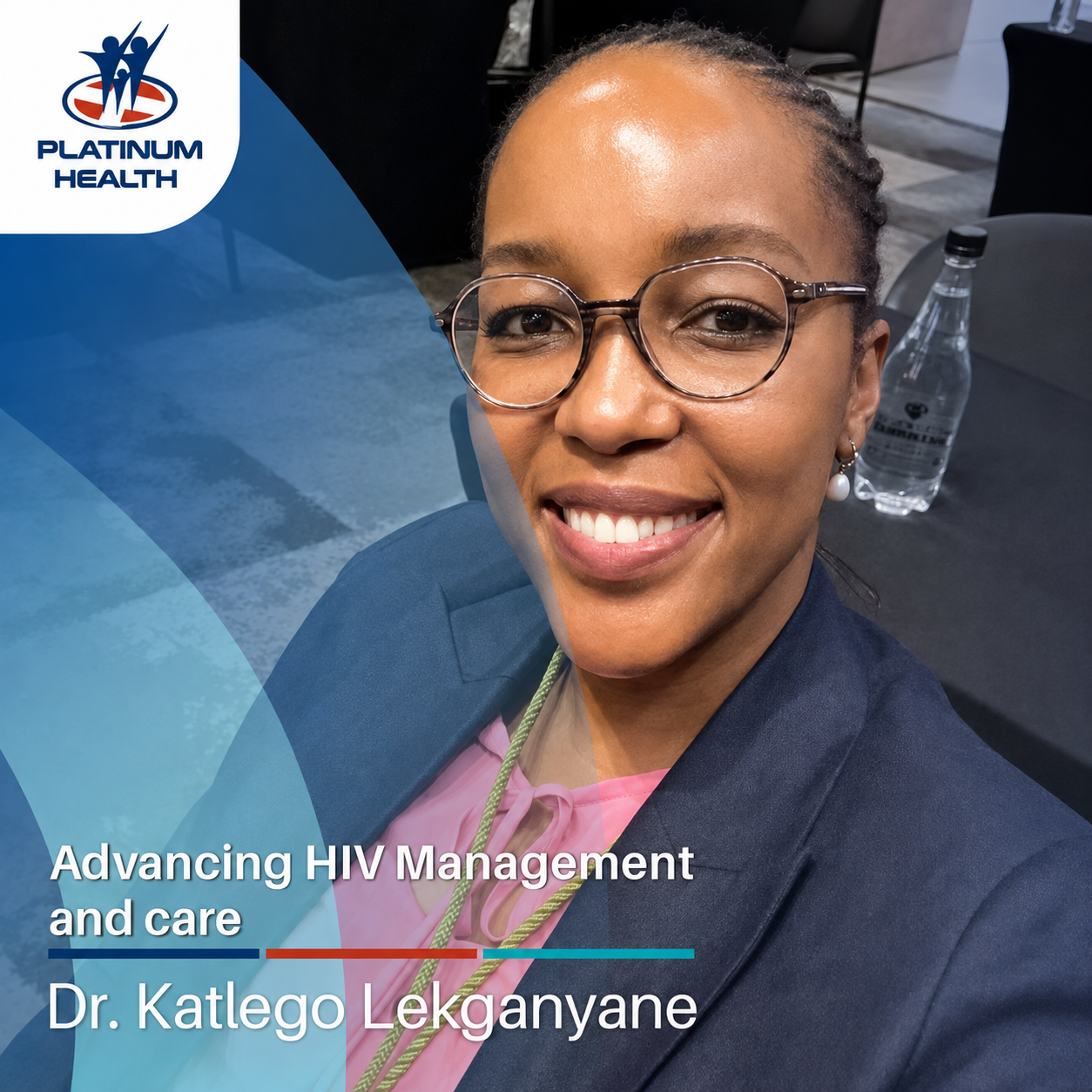
According to Dr. Katlego Lekganyane, a General Practitioner and HIV Lead Clinician at Platinum Health, the scheme’s HIV management programme has proven to be one of its biggest successes.
It has consistently met and even exceeded the UNAIDS targets for HIV management.
Achieving and Exceeding Global HIV Targets
The UNAIDS targets are frequently referred to as 95/95/95. The aim of these targets is straightforward.
First, 95% of people living with HIV should know their status. Second, 95% of those diagnosed should receive antiretroviral therapy (ART). Finally, 95% of those on ART should achieve viral suppression.
“At Platinum Health, we achieved these targets in 2024, and are now closer to achieving 97/97/97,” says Dr Lekganyane.
In practical terms, reaching the 95/95/95 milestones means that most people living with HIV (PLWH) know their status and receive effective HIV treatment. Achieving viral suppression translates to fewer HIV-related complications and a much longer quality of life.
It also means less HIV transmission through the U=U principle (Undetectable viral load = Untransmittable HIV virus), directly resulting in a reduced number of new cases.
Managing Health Alongside Increased Life Expectancy
Due to robust HIV treatment, life expectancy in PLWH has increased significantly. Consequently, ageing-related illnesses, polypharmacy, and treatment toxicity are becoming much more prominent.
Patient-centred care and the integration of treatment are absolutely vital. Clinicians must adopt a holistic view of the patient to consider proper treatment customisation.
Dr. Lekganyane notes that success beyond viral suppression is measured by the overall quality of life. This includes reduced opportunistic infections, fewer hospitalisation instances, and better prevention of non-communicable diseases.
As HIV management evolves into treating a long-term chronic condition, new risks emerge. Cardiovascular diseases and treatment toxicity require proactive screening and careful selection of treatment regimens to minimise long-term harm.
“Transitioning patients to newer therapies is thus critically important if health institutions are serious about patient-centred care and the quality of life in PLWH beyond viral suppression. This further supports sustainable, affordable, quality health care, by mitigating costs in complication management and hospitalisations,” continues Dr. Lekganyane.
“Comorbidities such as chronic kidney disease (CKD) and bone density loss are increasingly vital aspects of modern HIV care. These complications do not only come with ageing but can occur prematurely in PLWH. This can be caused by the virus itself or certain classes of older HIV treatment,” says Dr. Lekganyane.
Uniquely among medical schemes, Platinum Health has proactively introduced funding for kidney-friendly, bone-density-preserving HIV treatments for its members.
The Long-Term Benefits of Advanced Interventions
“It should also be remembered that alternative or newer HIV treatment might cost more upfront, but the benefits, such as significant reductions in costs related to morbidity, specialist care and hospitalisation, will be evident in the long-term,” she suggests.
“Today, we can reduce new HIV infections through Pre-Exposure Prophylaxis (PreP), Post-Exposure Prophylaxis (PEP), and anti-retroviral therapy (ART), which serves to reduce opportunistic infections and other complications related to disease progression and HIV transmission.”
Furthermore, Lekganyane adds, digital health technology now enables data-driven decisions, such as patient risk stratification, to support treatment optimisation and improved care coordination. This technology also helps the Scheme monitor HIV management outcomes.
“Another crucial aspect of HIV management is the impact of treatment on Disability-Adjusted Life Years (DALYs). This speaks to the morbidity – the life lived with disability – and the mortality, or years lost, due to the disease. HIV management has come a long way and has significantly reduced DALYs by introducing robust ARTs with fewer side effects, promoting longer quality of life.”
“Crucially, better HIV care enables economically active individuals, the most affected group in SA, to be physically well, employable, and able to remain at work. This reduces absenteeism and supports household stability. At a societal level, it strengthens workforce productivity, reduces dependency and contributes to the broader economic resilience of our country.”
Key Lessons for the Healthcare Sector
The Platinum Health Medical Scheme HIV programme promotes and improves population health and social stability. It reduces long-term healthcare costs and maintains workforce productivity, ensuring economic sustainability.
This approach aligns perfectly with environmental, social, and governance (ESG) principles.
“I believe Platinum Health has one of the best HIV management programmes, supported by our Health Maintenance Organisation (HMO) model, and there are lessons from our model that could benefit the wider healthcare system,” Dr. Lekganyane states.
“Key lessons include coordinated care and investment in primary health care that focuses on preventative programmes and integrated chronic disease management. These lessons can be applied across other chronic conditions and healthcare settings.”
The Next Decade of HIV Longevity
HIV management will continue to advance rapidly over the next decade.
The focus is shifting firmly towards treating the virus as a chronic condition using therapies that are much safer for the ageing body. Integrating HIV care with the management of other chronic diseases will ensure a longer life and a higher quality of life beyond viral suppression.
“We will continue to shift the conversation from basic HIV survival to one of HIV longevity, with the associated improvement in patient quality of life and the ongoing delivery of sustainable healthcare economics,” concludes Dr. Lekganyane.
If you are looking to learn more about advancing your health or exploring comprehensive medical scheme benefits, visit the Platinum Health website to discover how modern care models can support your long-term wellbeing.