

Health Blog
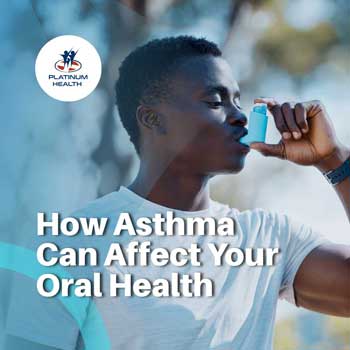
Asthma and your Oral Health

Asthma affects hundreds of thousands of South Africans, making it one of the most common chronic conditions in the country, and while most of us think about its impact on breathing, it can also affect oral health in surprising ways. The medicines that help you breathe easier can sometimes make your mouth more vulnerable to problems like cavities, gum disease, and infections. Understanding these risks is the first step to protecting your smile.
Dry mouth: Many asthma medicines, especially inhalers, reduce saliva. Saliva is your mouth’s natural defense as it washes away food particles, neutralizes acids, and helps fight bacteria. Without enough saliva, teeth are more likely to develop cavities.
Tooth decay: A dry mouth combined with a lower oral pH creates the perfect environment for bacteria that cause decay. These bacteria thrive when the mouth is acidic and less protected.
Tooth erosion: Acids from food, drink, or reflux can wear away enamel. When enamel thins, the softer dentine underneath is exposed, leading to sensitivity and a higher risk of cavities.
Oral thrush: Steroid inhalers can increase the risk of fungal infections like thrush, especially when saliva is reduced. Thrush often appears as white patches in the mouth and can cause discomfort.
Gum disease: Mouth breathing and dehydration dry out gum tissue, making it easier for gingivitis (gum inflammation) and periodontitis (serious gum disease) to develop.
Plaque and tartar: Changes in saliva, including higher calcium levels, can lead to more plaque and hardened tartar. This buildup irritates gums and increases decay risk.
Lower pH: Some inhalers temporarily lower mouth pH, weakening enamel and making teeth more vulnerable to decay.
Tips to Protect Your Smile
- Always bring your inhaler to dental appointments.
- Rinse your mouth with water after using your inhaler, especially steroid inhalers.
- Brush twice daily with fluoride toothpaste and floss every day.
- Drink plenty of water to stay hydrated.
- Visit your dentist every 6 months, or more often if recommended.
Living with asthma doesn’t mean you have to sacrifice your oral health. With simple daily habits like rinsing after inhaler use, brushing and flossing, and staying hydrated, you can keep your teeth and gums strong. Regular dental visits will help catch problems early, so you can breathe easy and smile confidently.
Reference list:
Gani, F., Caminati, M., Bellavia, F., Baroso, A., Faccioni, P., Pancera, P., Batani, V., & Senna, G. (2020). Oral health in asthmatic patients: a review. Clinical and Molecular Allergy, 18(1). https://doi.org/10.1186/s12948-020-00137-2
Springer Nature. (2020). Association of asthma and anti-asthmatic therapy with oral health and microbiota alterations in children – a cross-sectional study. BMC Pediatrics.
Batani, V. et al. (2020). Oral health in asthmatic patients. Clinical and Molecular Allergy.