

Health Blog
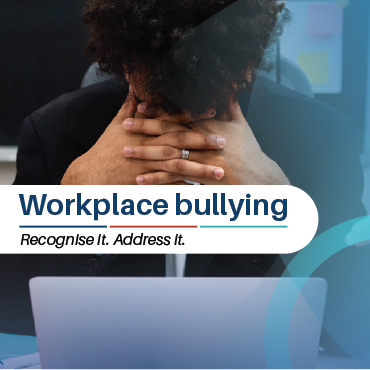
Workplace bullying. Recognise it. Address it.

Everyone deserves to work in an environment where they feel respected, valued, safe, and treated with dignity and respect. Unfortunately, workplace bullying remains a reality for many employees. Understanding what bullying is, how to identify it, and what steps to take can help protect both your wellbeing and your rights.
What is workplace bullying?
It refers to repeated and unreasonable behaviour directed towards an employee or group of employees that creates a risk to their health, safety, or wellbeing. It is usually a pattern of behaviour rather than a once-off incident. Bullying can occur between colleagues, from a manager towards an employee, or even from employees towards a manager.
How can you identify workplace bullying?
Bullying is not always obvious. Sometimes it occurs openly, while at other times it is subtle and difficult to prove. Signs of workplace bullying may include:
- Being repeatedly shouted at, insulted, or humiliated.
- Constant criticism that is unfair or unreasonable.
- Being excluded from meetings, communication, or social activities.
- Rumours or gossip spread about you.
- Receiving impossible deadlines or workloads designed to make you fail.
- Being deliberately withheld from important information needed to perform your job.
- Having your work constantly undermined or unfairly criticised.
- Experiencing threats, intimidation, or aggressive behaviour.
- Being unfairly monitored or excessively scrutinised compared to others.
How does bullying affect mental health?
Workplace bullying can have a significant impact on mental health, leading to stress, anxiety, depression, sleep difficulties, reduced confidence, and burnout.
Creating respectful workplaces
Everyone has a role to play in preventing workplace bullying. Respectful communication, supportive leadership, and early intervention can create psychologically safe workplaces where employees can thrive.
What should you do if you are bullied?
- Keep a record of incidents, including dates, times, and witnesses.
- If safe to do so, address the behaviour directly.
- Report the matter through the appropriate workplace channels or talk to your Human Resources for guidance.
If you need help, reach out to our Mental Health Services on 014 590 1700 or speak to an EAP counsellor on 010 133 0525, who is available 24/7 to offer counselling and support.
Remember: No one should suffer in silence. Seeking support is a sign of strength, not weakness.